Blog Year review

SLM in SSA: 2025 Highlights and 2026 Outlook

This current blog is the annual overview of highlights from 2025 and gives an outlook to upcoming activities for 2026 of the regional projects COINS, DecLaRe, InfoRange and Minodu and the accompanying project INTERFACES from the BMFTR-funded consortium for “Sustainable Land Management in Sub-Saharan Africa: Improving livelihoods through local research”.

Read on

Available in en

Highlights from 2025

2025 was a year in which some major milestones were reached, a year full of stakeholder engagement in a multitude of workshops as well as a successful Status Seminar with contributions and participation from across all projects.

In the penultimate year of most of the projects in the consortium “Sustainable Land Management in Sub-Saharan Africa: Improving livelihoods through local research”, fieldwork is slowly coming to an end. For COINS the focus lay on data analysis. While some data collection continued in the field, the COINS project partners advanced the evaluation of the socio-economic survey and completed key measurement campaigns on greenhouse gas emissions and biodiversity, including analyses of how field management practices influence these indicators.

In 2025, InfoRange advanced field-based research and co-design activities with pastoralist communities in Kenya and Namibia, integrating rangeland governance studies, spatial analysis, and participatory digital tool development. PhD students documented customary governance systems regulating access to pasture and water. In Kenya, students examined how Borana and Rendille elders manage dry-season reserves, negotiate access during droughts, and enforce rules through socially embedded mechanisms.

INTERFACES also continued fieldwork in Ghana with decision analysis modelling for integrated soil fertility management (ISFM) completed and validated by stakeholders and a study conducted on incentivising adoption of IFSM. Furthermore, in-depth data on gender-based violence, traditional norms and beliefs, and recent development on masculinity in agriculture was collected; and additional interviews to further assess the impacts of drought to deepen the analysis of coping strategies were concluded. The latter also provided a valuable opportunity to return to the field sites and share main findings from the PhD research with the smallholder farmer participants resulting in a meaningful feedback session.

Also in the DecLaRe project almost all field work has been completed and many final laboratory activities are being finalised at University of Development Studies (UDS) in Ghana after a long delay of the equipment with the first data for further data analysis now retrieved.

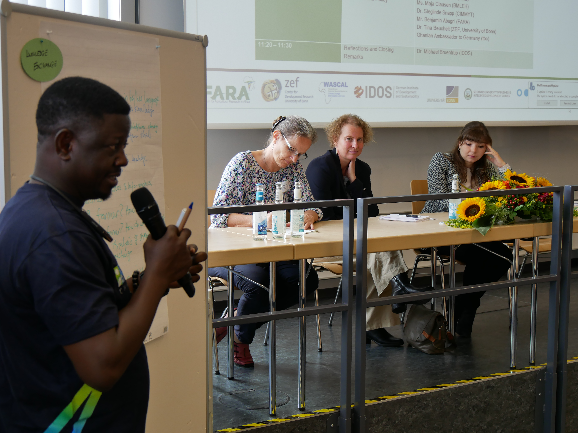
As the accompanying project to the consortium, INTERFACES continued in 2025 to offer a variety of capacity development activities to the regional projects. The Colloquium Series continued with eight colloquia, contributed by external experts and by researchers from INTERFACES, InfoRange and DecLaRe. Presentations are always followed by a lively discussion with the audience of 20-30 participants from all projects. All recordings are available from the sustainable land management website. Additionally, eight meetings were held in the Gender and Land Seminar Series. Media trainings also took place, including several camera and social media for research communication trainings. At InfoRange, weekly seminars continued and structured supervision supported transdisciplinary research among PhD and master’s students while internal reading groups strengthened collaborative learning. DecLaRe continued monthly meetings to share experience and give progress updates. Many research stays were carried out in 2025 that facilitated exchanges with co-supervisors.

A big highlight in 2025 was the launch of the E-Certificate on Research & Innovation for Sustainable Land Management (SLM) in Africa with a first cohort of around 35 participants. The modular, blended-learning format combined self-paced online units with live moderated sessions on land governance, climate and environment, land information systems, gender, and research & innovation. The programme was jointly developed by the Bonn-Rhein-Sieg University of Applied Sciences in cooperation with the University of Environment and Sustainable Development, Ghana, and the Forum for Agricultural Research in Africa (FARA).

Minodu was also able to run two online courses throughout the year: One on the question of “How can research results be translated into a format that is accessible for rural populations and values indigenous knowledge?”, and the other one about co-constructing linguistic methods to address climate challenges by developing a French-Kabiyè technical glossary on climate change and sustainable agriculture.

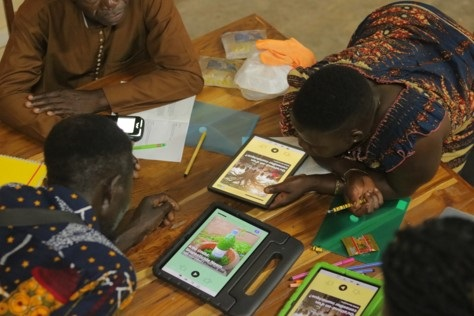
Additionally, within the COINS project the Initiative Prospective Agricole et Rural (IPAR) trained farmers’ organisations on Sustainable Rice Intensification (SRI), complemented by a Mass Open Online Course on SRI under integration into FARA’s platform. Furthermore, the West African Science Service Centre on Climate Change and Adapted Land Use (WASCAL) developed a biodiversity monitoring short-course outline and implemented multiple trainings through its SLM network activities. The United Nations University Institute for Environment and Human Security (UNU-EHS) co-created informal learning materials (storybooks, video scripts, games, radio concept) to support farmer learning and innovation uptake.

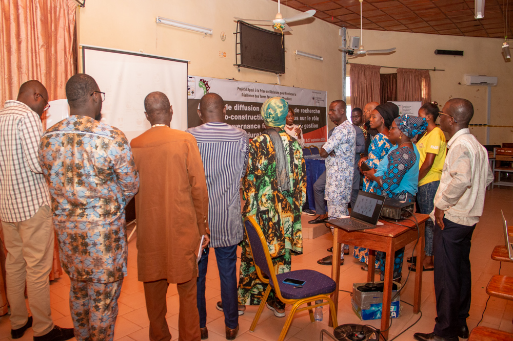
A number of workshops took place across the projects bringing various stakeholders together with whom initial research findings were shared and validated. For example, a series of three impact-oriented workshops were held with the Participatory Learning Platform (PLP) in Northern Ghana to discuss approaches for strengthening collaboration with Civil Society Organisations and the PLP to enhance the sustainability of the platform beyond the duration of the projects, to feedback results from the six PhD studies in the PLP villages and, upon request from the PLP, to strengthen PLP members’ capacity on Ghana’s new Land Act (Act 2020). The PLP runs across INTERFACES, COINS and DecLaRe.

Furthermore at INTERFACES, a final online workshop on good practices in funding of participatory and transdisciplinary research for sustainable development in Africa was held in May 2025, bringing together participants from research and research funding across Germany and selected African countries.

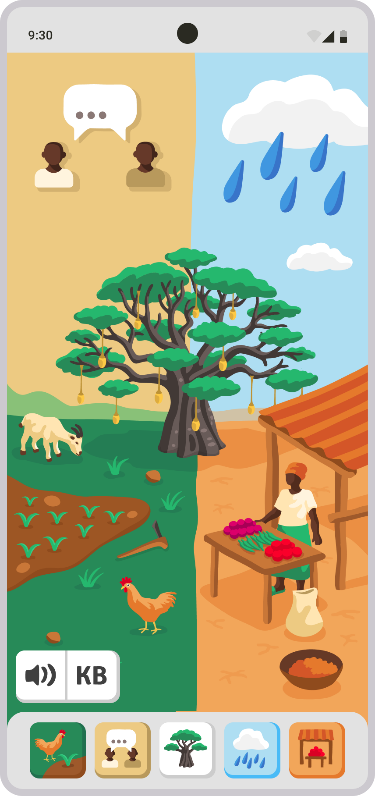
Also in May, Minodu conducted several participatory workshops with their students at the University of Kara and members of their three target communities in the North of Togo—Soumdina Haut, Lama Saoudè, and Tchitchao—to gather important insights and feedback on a high fidelity prototype of the Local Community Network, which continuously evolved throughout the rest of the year.

In September the DecLaRe team at WASCAL conducted stakeholder workshops in Northern Ghana and Benin aimed to convene farmers, researchers, local authorities and civil society actors to share scientific results and discuss land tenure security, governance and sustainable land management, with particular attention to the role of the Customary Detention Certificate (ADC).

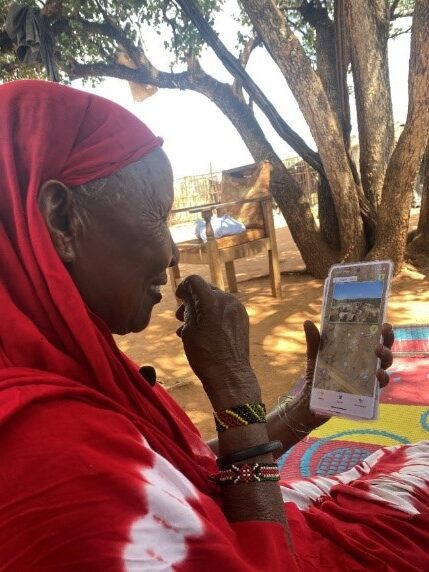
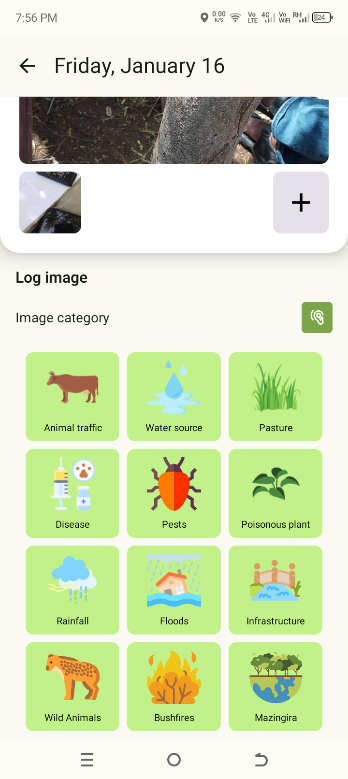
More on-the-ground capacity building took place with the InfoRange project where the Volunteer Information Facilitators (VIFs) regularly and consistently offered translation and search services to provide community members with access to information on livestock health, markets, risks and public services on the internet. Incremental smartphone training using familiar tools such as WhatsApp enabled community members to participate in co-design and share information on rangeland conditions, livestock health, markets and services.

And within the COINS project, Ruhr Univeristy Bochum (RUB) produced a practical field boundary mapping tutorial in English, French and Wolof, supporting applied capacity building, while Manobi Africa conducted farmer/agent-oriented trainings and built partnerships for soil fertility analysis and advisory.
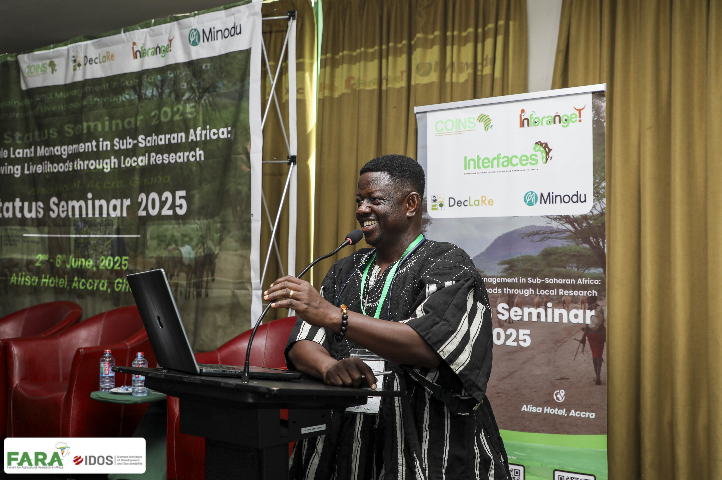
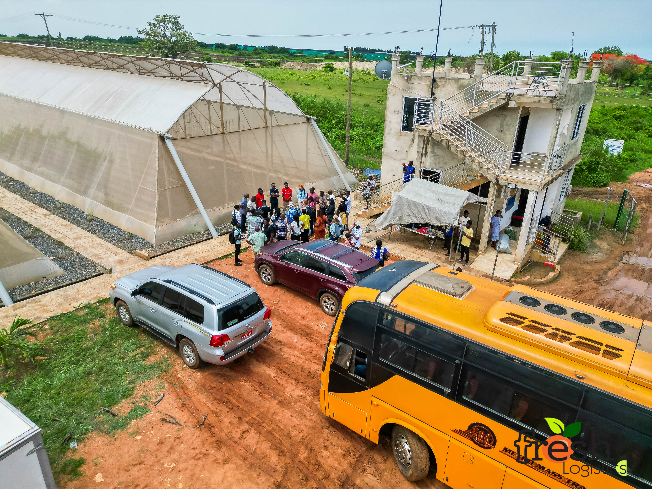
The Status Seminar in early June was a highlight in 2025. More than 100 participants from all five projects gathered in Accra, Ghana to exchange and discuss research on sustainable land management in Africa. The Status Seminar was preceded by several pre-conference workshops, which offered, amongst others, a training in drone flying, knowledge management, participatory approaches. Technical sessions were held on Co-development and transdisciplinarity, Soil management, ICT & machine Learning, Governance of land and natural resources, Data management, Pathways to impact and Exploring gender dynamics and intersectionality in sustainable land systems. The programme of the Status Seminar ended with a participative session in which the participants discussed ways forward to spread the knowledge through a variety of useful products. A field visit to a Rice Research Station and to Fresh Logistics Limited, a project dedicated to foster youth employment through vegetable production for the Accra market, complemented the programme.

Directly following the Status Seminar came the European Conference of African Studies (25-28 June) in Prague, Czech Republic, for which INTERFACES organised two panels on “From agricultural knowledge to innovation and adoption: empowering smallholder farmers”. Selected presentations will be included in a special issue with the Elsevier journal Scientific African—an upcoming highlight for 2026.

Another collaborative event’s highlight followed in September with the third pre-conference workshop “Bridging the gap: strengthening science-policy interfaces in agricultural research” at the Tropentag conference on Reconciling land system changes with planetary health. InfoRange also organised a pre-conference workshop on co-design. Team members from across all projects participated and presented both oral and posters sessions at Tropentag—a number of researchers also winning poster awards and the photo competition.

Further conference highlights came in October, with INTERFACES researchers giving oral presentations at the 2025 biennial CGIAR Gender in Food, Land and Water Systems Conference in Cape Town, South Africa, which received significant and positive feedbacks, as well as in November with Minodu’s participation in the African HCI conference (AfriCHI’25) in Cairo, Egypt. COINS team members also represented in different international conferences like the ESA Living Planet Symposium and the European Geosciences Union General Assembly and an invited key note at the AfriGEO in Dakar, Senegal.

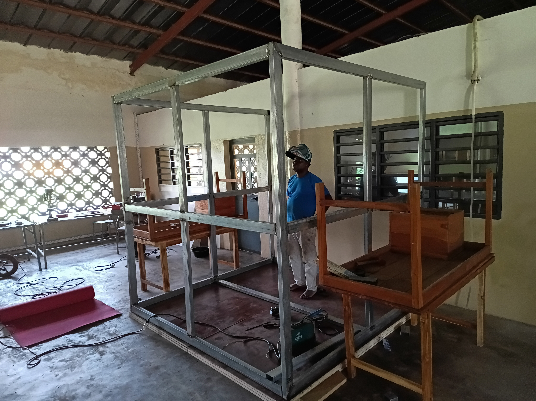
This past year’s outreach and networking shows how far the projects have developed with an array of publications in the pipeline, submitted and published as well as presentations given at a multitude of international conferences. Outreach has also happened on the ground with a highlight from the Minodu project in the construction of a soundbox, which enables the recording of audio files in a noise-protected environment and is an essential component for the podcast recordings, with practice-based local research made more understandable for citizens. Also within the COINS project Farmer Field Schools and Living Lab approaches have been evaluated to test and disseminate sustainable land management practices with farmers.

Planned activities 2026

After three years of data collection, analysis and validation, the focus for 2026 will be on publications and wrapping up the projects in respective annual meetings.

Fieldwork is winding down in 2026, except for InfoRange with their project running into 2027. In 2026, InfoRange will consolidate, validate, and integrate research findings through continued field activities in Kenya and Namibia, with follow-up visits with pastoralist communities to validate findings on rangeland governance, livestock mobility, and information-sharing practices, and to discuss results with community institutions and local authorities. Longitudinal datasets on rangeland use will be strengthened through GPS tracking, participatory mapping, and satellite and drone-based remote sensing. Spatial and qualitative data will be integrated to support holistic understanding of rangeland dynamics and pastoral decision-making.

Co-design and user acceptance testing of the InfoRange Rangeland and Veterinary Apps will continue, with functionalities refined based on user feedback. Livestock marketing and vet informatics tools will be further developed and validated, particularly in Namibia. Participatory epidemiology and livestock health decision mapping will inform veterinary app functionalities and knowledge repositories, with field insights translated into decision-relevant digital outputs ensuring usability across sites.

The Minodu team is currently preparing a field trip to Togo in March. The aim of this trip is the installation of the Local Community Networks in a demonstrative practice in the three communities, Soumdina Haut, Lama Saoudè, and Tchitchao, in northern Togo. The LCNs will then be tested in practice in a field trial lasting several months.

In the first quarter of 2026 the DecLaRe scholars will conclude their fieldwork and then focus more on data analysis and publications.

The INTERFACES Colloquium Series will continue into 2026 until July. A second cohort for the E-Certificate on Research & Innovation for Sustainable Land Management (SLM) in Africa is planned for early 2026. Already 38 participants have been shortlisted from Ethiopia, Nigeria, Togo, Ghana, and Tanzania, with further refinement of learning materials, strengthened facilitation, and one publication in preparation.

At InfoRange, education and capacity development remain core priorities in 2026. PhD and master’s students will receive continued supervision through regular seminars focused on data analysis, academic writing, and thesis completion. Transdisciplinary research skills seminars and mentoring will strengthen methodological competencies.

Furthermore, peer-assisted learning will be sustained through ongoing engagement with Volunteer Information Facilitators (VIFs), including refresher trainings and targeted digital skills support building on earlier project phases. Training materials and guidance will be consolidated to support sustainability beyond the project lifecycle.

Using participatory evaluation workshops and key informant interviews in northern Ghana, the INTERFACES project will conduct a robust evaluation of the PLP in March 2026. In July, the results from the evaluation will be presented and validated by the PLP in a workshop.

In the final stages of the projects, PhD defenses and publications take centre stage, as well as final project conferences and meetings being planned.

The first annual meeting of the regional projects is for the DecLaRe project, which will be held in April. The focus of this annual meeting is outreach, including the development of a series of policy briefs, supported by INTERFACES, to facilitate knowledge exchange and disseminate project outcomes to a broader audience across all subprojects.

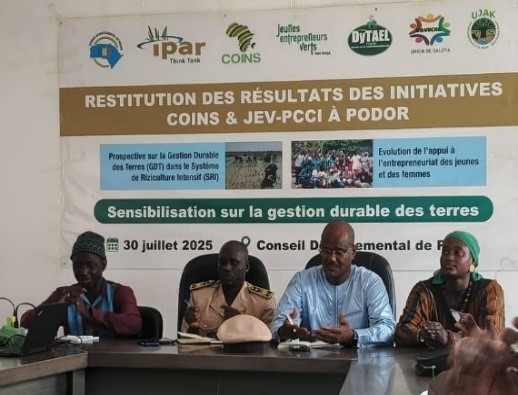
Within the COINS project, RUB and WASCAL plan to co-organise a hackathon in Tamale (UDS campus) focused on remote sensing training and low-cost sensor building (with pitching/awards). Also two dissemination workshops are in the pipeline to be held in Senegal and Ghana, with the latter being the closing workshop of the project planned for 7-9 July 2026.

Minodu have already taken the first steps in preparing for their final conference, which will take place in two phases in November. The conference will focus on re-negotiating knowledge, with a particular focus on decolonial cooperation, local resilience and community-based science communication. Representatives from civic society, particularly from the project communities, as well as from academia, politics, development cooperation and the maker-scene, are invited to contribute to the conference.

InfoRange will maintain active engagement with scientific, policy, and practitioner networks through Technical Working Group meetings and stakeholder dialogues. Targeted exchanges with veterinary, agricultural, and environmental institutions will support knowledge uptake and alignment with practice. Researchers and students will disseminate results through international and regional conferences, workshops, and peer-reviewed publications.

Finally, INTERFACES is planning a synthesis product. This non-academic publication is to showcase the transdisciplinary and participatory research on core cross-cutting themes from the regional projects of the BMFTR-funded consortium “Sustainable Land Management in Sub-Saharan Africa: Improving livelihoods through local research” over the past 4 years. Dissemination of the synthesis will be at the final conferences and meetings of the regional projects as well as at further selected events.