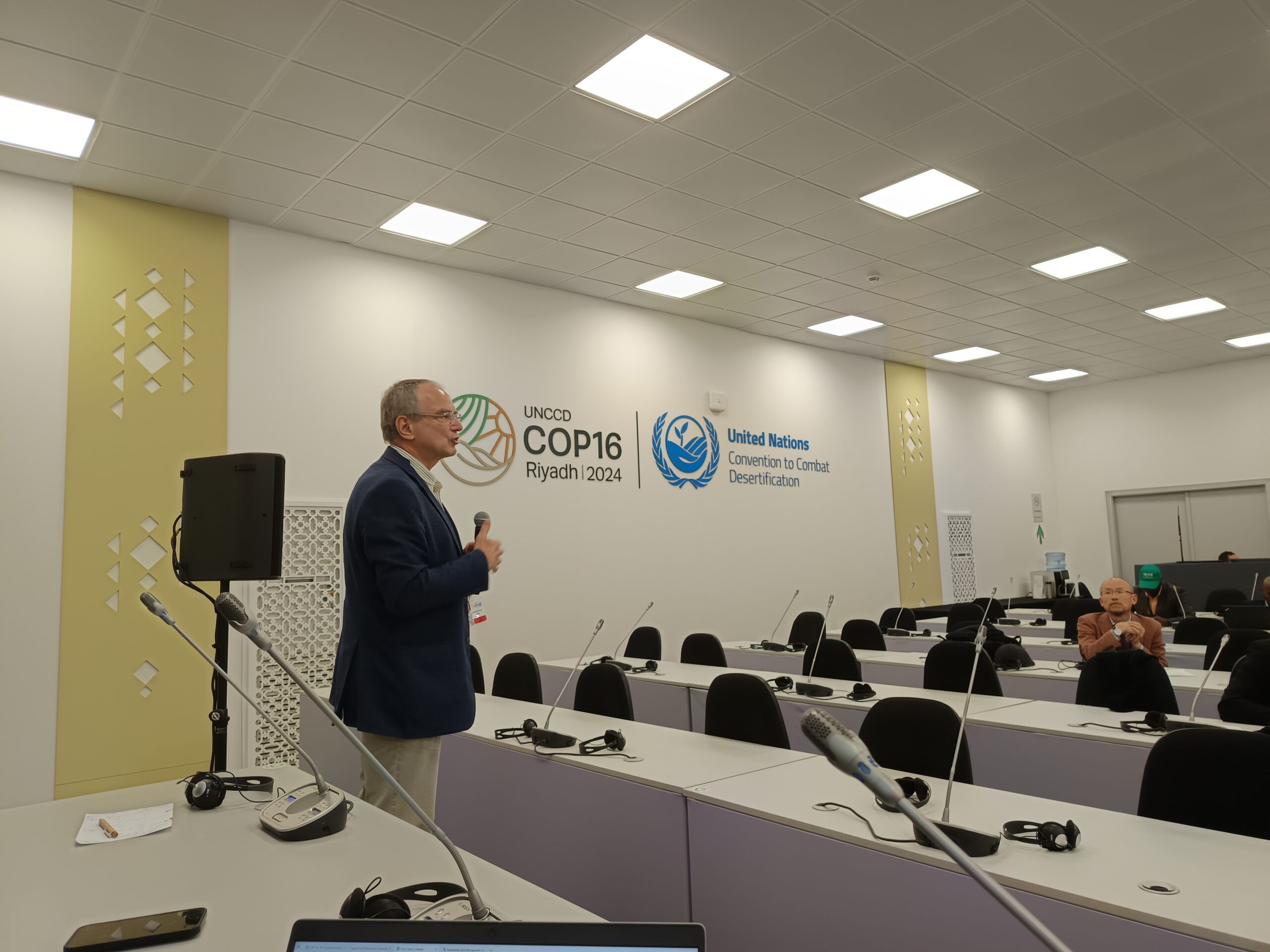
Empowering Youth for Sustainable Land Management in Sub-Saharan Africa
Agricultural practices shape land health across interconnected landscapes, yet Sub-Saharan Africa faces low innovation adoption, stagnant productivity, and increasing land degradation. While traditional hierarchical structures dominate agricultural societies, change is essential for achieving sustainable land management.
The solution requires curriculum reform and long-term commitment to equip the next generation with land stewardship skills—vital for economic development and the three Rio Conventions. Youth bring ambition and openness to innovation but often lack decision-making power in traditional settings. Without integrating young people into sustainable land use innovation, future generations won’t have the tools to combat land degradation.
Key Insights from Fishbowl Discussion
Bridging Generational Gaps:
- Develop exit strategies for current land custodians (social protection, pensions) to make land accessible to youth
- Shift focus from production-only agriculture to agribusiness with value-added activities and market opportunities
- Address socio-cultural barriers hindering innovation adoption
- Recognise the demographic shift to tech-savvy Gen-Alpha
Supporting Youth Leadership:
- Create youth co-director positions, especially in youth-focused organisations
- Expand peer-to-peer learning through youth forums
- Enable youth-driven benchmarking and interventions
- Engage marginalised and indigenous youth
Capacity Building:
- Invest in student agency—mindset and skills beyond certificates
- Prioritise practical skills for today over future expectations
- Let students design their own curriculum (especially dropouts and internally displaced persons)
- Host innovation weeks with debates and competitions
Tailored recommendations to empower youth’s role in innovation are needed for key stakeholders: CGIAR, universities, policymakers, donors, financial organizations, elders, and local communities.
The activities of the accompanying project INTERFACES and the four regional projects, COINS, DecLaRe, InfoRange and Minodu are funded by the Federal Ministry of Research, Technology and Space (BMFTR) as part of the platform strategy Research for Sustainability (FONA). Further information on the projects can be found on our website and on the FONA-Website.