A question of respect: gender, interpersonal dynamics, and sustainable agriculture in Northern Ghana
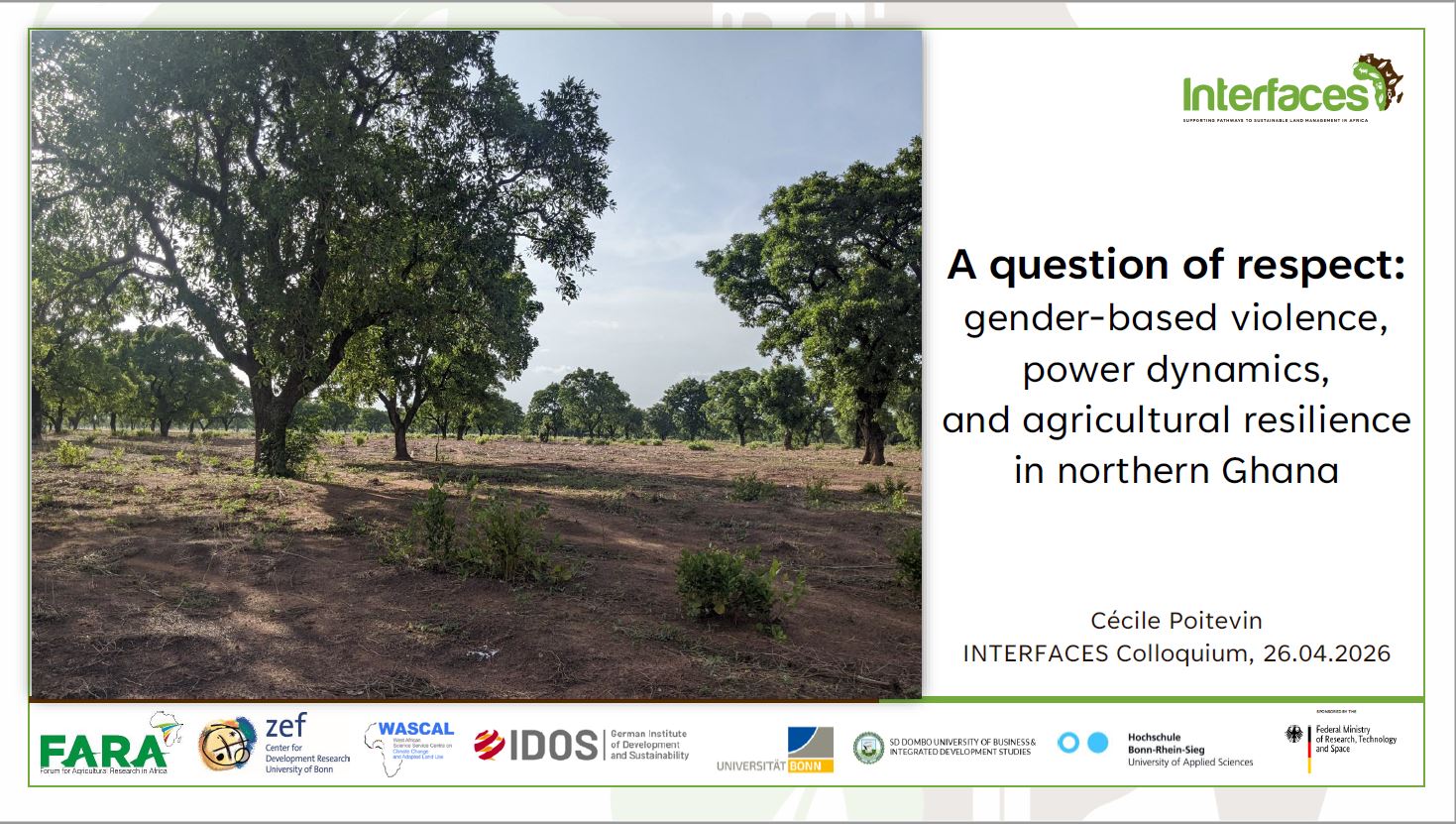
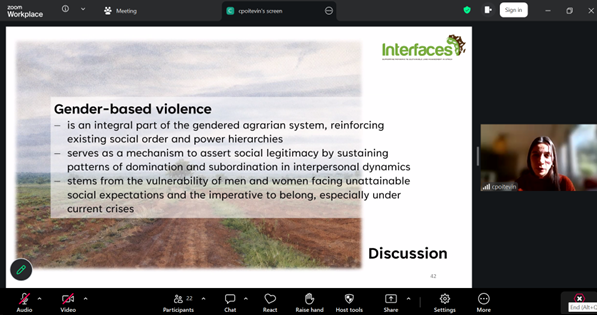
On 26 March 2025, the INTERFACES colloquium series featured a contribution dedicated to International Women’s Day by Cécile Poitevin, PhD candidate with the INTERFACES project at the Center for Development Research. She presented parts of her research on gender and sustainable agriculture in West Africa in a presentation entitled “A question of respect: gender-based violence, power dynamics, and agricultural resilience in northern Ghana”. More than 20 participants from several of the regional projects and external guests listened as Ms Poitevin presented a framework of gender and its power relations in agrarian systems and then explained four forms of gender-based violence (GBV), namely physical, psychological, economical and sexual GBV. For each of these forms, Ms Poitevin underlined examples with pertinent quotes from her field research interviews. It became evident that GBV weighs on both men and women by reinforcing expected gendered behaviours and attitudes. As a result, it functions as a mechanism to uphold the symbolic recognition of dominant groups within agrarian systems. The presentation concluded with the key insight that respect, specifically, recognition of individuals’ gendered social positions, is a critical consideration for projects seeking to increase the participation of women farmers in agriculture. In gendered agrarian systems, like the ones of the study, projects working on women empowerment must actively engage with existing hierarchies of legitimacy and the gendered social expectations that shape resource distribution. Ignoring these dynamics risks undermining the legitimacy of dominant groups, as well as the project’s acceptance, sustainability, and even the safety of its beneficiaries.
The following discussion allowed to go even deeper into several aspects of GBV. The group discussed, amongst other issues, whether polygamy could be seen as a situation increasing or potentially alleviating GBV; that men can also become victims of GBV although less as physical but rather as psychological violence, for example by feeling humiliated by their wives; and how and in which time frame behaviour could be changed, given the strong persistence of social norms. It was made clear that women cannot easily leave a violent situation at home as leaving would result in loss of children, land and status. Thus, most stay on despite GBV situations. The role of chiefs was discussed, who may be strong change agents if they communicate the need for understanding women’s needs and respect amongst gender groups.